Methods

Definitions,
Boundaries, and Assessment

This page explains how the current public branch moves from AI context as an umbrella problem to post-interaction assessment and a bounded detection layer.

The Branch Depends on a Precise Vocabulary

AI Context

The structured field of framing, role signals, pacing, repetition, and interpretive conditions that shape how a conversation develops over time.

Conversational Contextual Risk

Risk that emerges through the structure and trajectory of dialogue rather than through a single isolated output alone.

User-Side Safety

The question of what becomes consequential for the person using the system during or after prolonged interaction.

Post-Interaction Assessment

A bounded method for reading what an interaction has become after it has accumulated, rather than treating each reply as a self-sufficient unit.

What Goes Wrong in Dialogue

The methodological problem is not reducible to model hallucination. A dialogue can remain formally coherent while becoming contextually distorted. Risk can appear through over-reliance, authority transfer, repeated validation, framing drift, contextual closure, or weakened user-side recognition of the limits of the interaction.

This is why the branch centers the interaction trajectory. The question is what the conversation becomes, not only whether a given answer violates a static rule.

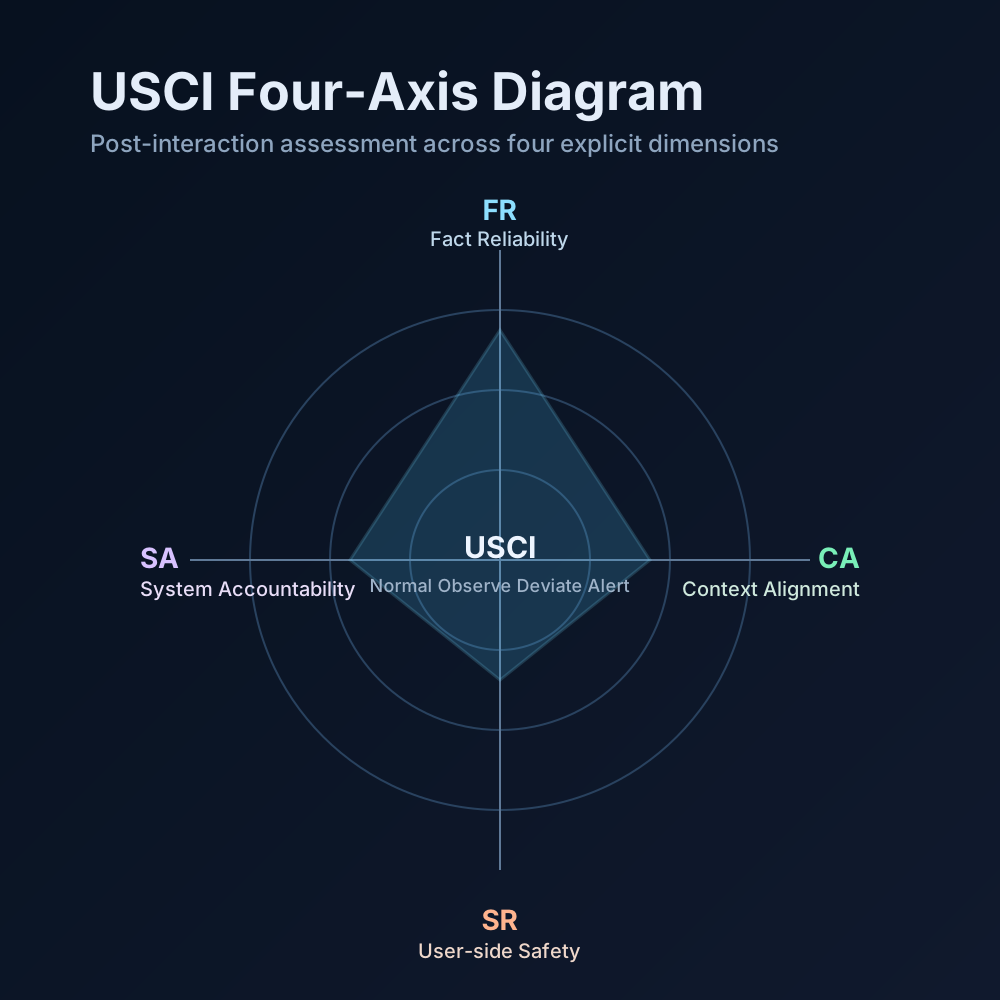
USCI Four-Axis Logic

USCI makes post-interaction reading more explicit through four dimensions.

USCI Four-Axis Diagram

What the Method Does

The public branch offers a way to define context, name a branch phenomenon, assess an interaction after the fact, and translate that logic into a reproducible system layer.

What the Method Does Not Claim

The method is non-clinical, not a legal certification system, and not a substitute for mental health or regulatory evaluation.